
Outdoor learning
As part of our #MagicOfChildminding campaign, we’re celebrating childminders across England and Wales by showcasing the incredible difference they make to children, families, and local communities every day. Here, Daisy from England shares her story and reflects on how her love for nature and the outdoors creates magical day-to-day experiences for the children in her setting.
How long have you been working as a childminder and can you give some information about your setting and what is unique about it?
I have been doing this for 10 years.
I’m really bad at blowing my own trumpet but we live on a really small island where there’s not a lot of childminders. We are out every day and we are so lucky where we live as I walk out of my front door, I turn to the right and I’ve got a beach. I turn to the left and I’ve got the forest. I think the fact that we’ve got that on our doorstep is ideal and we are out, honestly, every day. We have been to the allotment this morning and I’m pretty sure I can say that no other childminder in my local area has that. That is one thing that makes me unique to anyone else. Nature is my curriculum. We use nature, we’re out in nature, we appreciate nature, the children develop a love for nature and a respect for their world.
Do you have any examples of how children benefit from the outdoor learning element of your setting?
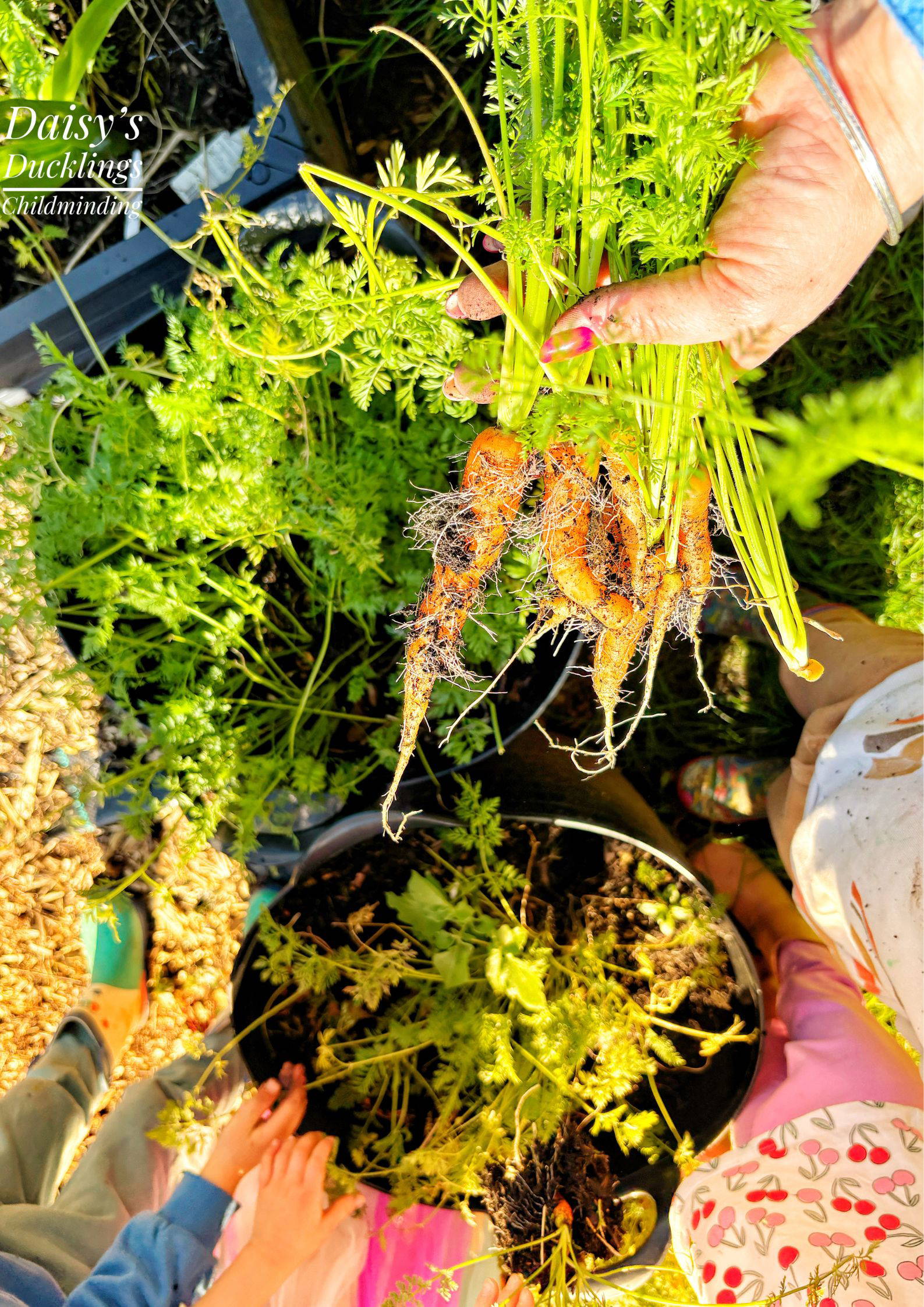
I am currently stood in my kitchen watching the children in my garden, with my assistant, munching on carrots that we’ve just picked. We have just planted raspberry canes and whilst we were there, we’ve picked some purple sprouting broccoli, some carrots and some kale. The carrots we’ve literally just washed off and munched on.
They’re now poking the green bit of the carrots through the hutch for the rabbits because, you know, waste not want not. For me, it is so important to take children outdoors, especially in this day and age where screens are such a massive thing. That understanding of where food comes from is so crucial, I think a lot of people don’t always really understand it. It’s so easy these days as everything’s so immediate. We go to a supermarket, we pick up our food and that’s it. But we get to appreciate the journey of our food and to be part of it.
"We've waited a long time for those carrots. We planted them last October and they get so much joy from seeing that tiny seed grow through the whole cycle and then being able to eat it themselves and present it to take it home to their parents. Because this carrot is amazing. They always ask, “Can I take it home?” Of course you can. It's just invaluable. You can't measure it."
Daisy
How do you build a sense of community between children, families, and your wider community?
My youngest is 10 and childminding still fits in with my family life. Last week, I took a couple of my little ones up to the reading cafe at my youngest’s school and we sat and read with her. I can still go to those parent events and then the younger ones benefit as well. We went up and read stories and it was so lovely for her to have me there as her Mum, and her little friends that I could take with m,e because they’re like siblings and we’re just an extended family. It is really lovely that she gets to have those relationships and I still get to do that with her.
How do you think that children benefit from that engagement outside of your setting as well?
I mean just being outdoors encourages critical thinking and I’m a big believer in risky play. I’m watching a one-year-old now scale the steps. Obviously, my assistant’s outside and she is watching them. But the confidence that my children, I call them my children, my children have when we’re in the forest and they’re climbing a tree and I’m telling them “you can do it. If you feel safe, you do it. If you need a hand, you let me know.” I very much a step back and let them, let them risk assess, let them tell me if they need help. The confidence and the resilience that builds in them is unmeasured.
Being outside like this is something I don’t think they’d get anywhere else. It gives them an awareness of keeping themselves and their friends safe, the empathy that it builds when you see three-year-olds who can confidently climb a branch help a one-year-old, they’re doing that. I’m just taking a step back and I can observe that and it’s just so wonderful to see those bonds and those relationships be formed and built on. It’s very rewarding for me, but for them obviously as well.
How do the children in your setting benefit from the unique aspects of home-based childcare?
It’s forming bonds with older children. I’ve got some children that come to me that have their younger siblings or older siblings in the setting, and it is lovely for them to be together. Also, for children that don’t have siblings, they get to benefit from being with older children and younger children. I do school pickups and they come home and the older ones are so excited to see the little ones and the little ones are so excited to go to school and pick the older ones up. The little ones are trying to ride a bike because the big ones are, they learn from modelling. The older children are such good role models to the younger ones. You don’t always get that if you’re in a room sectioned off because of your age just because you’re a two-year-old, when you might want to do what a four-year-old’s doing.
How do you celebrate each child’s individuality and weave their interests into your daily routines and learning?
I think that being a childminder, that is the beauty of our job. We have smaller ratios, we have less children and we know our children inside out and back to front and upside down. I’m very much planning in the moment. I do some adult led things that go along with their interests, but today I had a cousin come round and drop off those raspberry canes for me. So, they were asking me “what are these? Well, can we go and plant them? Okay, let’s go see the allotment.” So we went to the garden centre and we bought some soil because I didn’t have enough. All that is planning in the moment. They wanted to do that. They chose to do that. They chose to learn about that. It’s not me telling them what they should learn and when they should learn it.
"They are masters of their own curriculum and their own development and because I know them inside and out, I know how to scaffold that and how to build on that. It's the beauty of knowing your children and giving them your all. It's not always equality, its equity. Some need a little bit extra support, but they all have the same opportunities that are shaped individually to their needs."
Daisy
Do you find that because they do more outdoor learning with you that they gravitate more towards it when they’re trying to choose what they want to do that day?
Yes, but then we also get days where I go “right, guys, I’d really like to go to the beach today” and they’ll tell me they want to stay in. Being a childminder, I’m not tied to not being able to get out or having to plan a day out. If we want to just pop in the car and go to the beach, that’s what we do. If we want to go to the park, we do. If we want to stay in, then they can. We’re a home-from home environment. If they want to chill out on the sofa and read a book because they’ve had a busy weekend, then that’s what we do. That’s all learning and that’s all development but it’s just different every day and it’s tailored to them, and that’s the beauty of it.
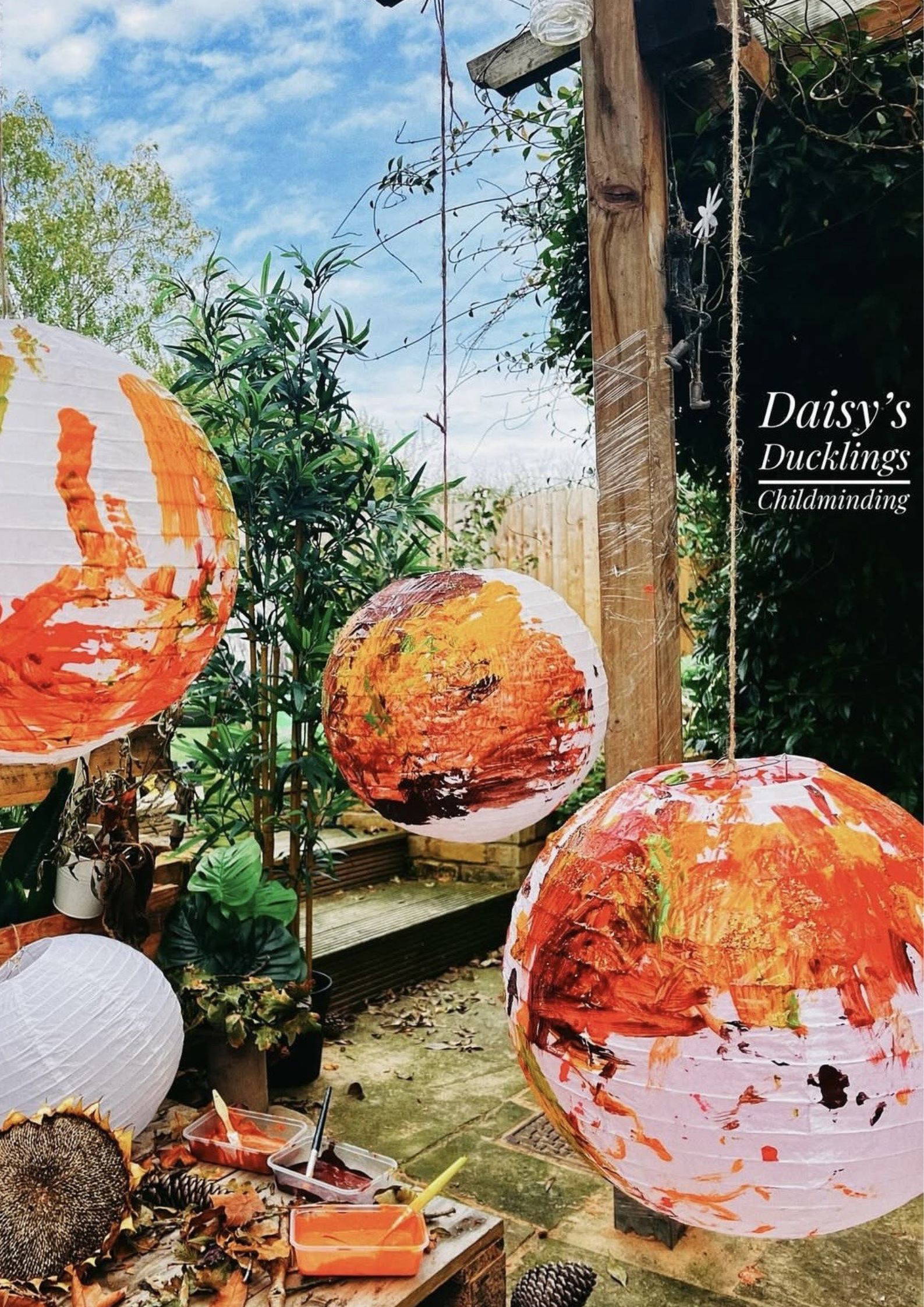
Sometimes I might say that I thought we could do some painting and let’s paint birds because you were all looking at birds yesterday. They might go; well we want to do worms because birds eat worms. Then we do worms. That is the beauty we can adapt at the drop of a hat. Even just a day could be tailored exactly to them because, that’s what they’re going to get the most out of.
In your view, how does childminding support children in the long term? What lifelong skills do they gain?
Again, that love of nature, that love of being outside and that appreciation of nature, growing their own food, that’s a lifelong skill. That love of nature lasts forever. I spent my childhood on the beach or in the forest and I still love it now, which is why I do that for a job. That sets them up for life.
How do you make your setting inclusive and magical for children with SEND and those with emerging needs?
I have supported a few children with diagnosis. Mainly they’ve been diagnosed after they’ve left me and gone on to school, but that’s been more of a parental choice. I have had a child with Avoidant Restrictive Food Intake (ARFID), which obviously was quite a challenge to his diet and therefore then his health. We did a lot of work, sensory play and making and eating our own food to prepare him for school. I’ve worked with children with speech and language needs, again, working alongside professionals but putting in place things here especially when they’re heading on up to school then working in partnership with schools.
Every child is individual and you support them with their own needs. We do underplay it because ultimately we’re just supporting that child. Have I been to schools for meetings about transitions and supporting that child? Yes. But I would do that for any of the children in my care? Yes. I suppose you could say that’s above and beyond but for me it’s not because, that’s my job. That’s what I do. I’m always going to support my children to have the best start.
We’ve got a really good early years SEND team here on the island and our early years advisor comes out and offers advice. I support transitions with schools because otherwise you’re setting the children up for failure. We just do what we can to help them thrive when they leave us because that’s what we’ve done for the first five years anyway.
How do you build trusting relationships with the parents of children that you support?
By having a very open and honest environment, they’re coming into your home, their children are coming into your home so they’ve got to trust you. You’ve got to form a working relationship and when you open your home up to a child, you open it up to their family to become your extended family.
I’m really lucky. I’ve got a wonderful set of parents, and I suppose with your families you form a non-judgmental space. I like to think they could trust me and come to me if they needed anything or they needed to let me know anything and I would support them. I’ve got a little one at the moment whose parents have just separated. It’s important to support them through those transitions and it’s supporting the parents as well through that because that’s a really, really hard time. Of course, they’re worried about the impact that that’s going to have on their child, so you’re not just supporting the children, you’re supporting the whole family as well.
The family who have just separated, Mum’s had to deal with Universal Credit and a change in her income. Whatever I can do to help I do. She had an appointment and I had the little one for her as an extra. It’s because she didn’t want to drag him along, and I had him just to ease the stress of those things a bit. It’s just being a nice person and doing what I can to help because again, it helps the child, but it helps the family as well.
How else have you been able to help the children in your setting and their families through transitions?
Just recently I had a little one on New Year’s Eve because his Mum and Dad got married. They haven’t got any family here and of course the family they do have they wanted to be at the wedding. I was honoured to look after him. They had the most wonderful night because they knew he was safe and cared for and in a home environment he knew and where he was comfortable, happy and safe.
It’s an everyday thing that we just do. If that means Mum drops off and she’s had a really bad night and you go, right, you need to come in for a cup of tea for 10 minutes. Or the other day I knew Mum had a really rough day at work. She’d messaged me that she was going to be late. We went out, we picked some wildflowers for her and wrapped them up in a little ribbon with the child so that Mum got a little bunch of flowers. If the family’s happy, then the children are happy. It’s about the wider impact that you have on the whole family.
"For me, I think the magic of childminding is that I have the privilege to have an input in our next generation. That I get to witness the magic of early years every day, the friendships, the love, the care, the wow moments that they have. I get to do that as a job. For me, that's magic. I guess to know that I'm providing them with such wonderful, free and wide ranging childhood experiences is pretty magic. I still now stand on the beach or in the forest watching them thinking, I'm doing this for a job. It's magic, it's brilliant. Even after 10 years now, I'm like this is brilliant."
Daisy
Testimonials from parents with children at Daisy’s setting:
We chose Daisy for both our girls, because of this. In my opinion, because of the smaller environment, the children receive more focus on themselves personally. Daisy has so many child-lead play experiences and initiatives for children in her care, and that is so important to us as a family, to give our children their own autonomy as they start to learn and explore the world around them. I absolutely love Daisy and her assistant Taz for all they provide for our children. I would not EVER go anywhere else.”
– Parent
– Parent
We love the smaller, more personal environment. Our child isn’t just one of many, they’re truly known and understood. The bond they’ve built is so special, and it gives us so much reassurance every day.
The flexibility, the calm atmosphere, and the mix of real-life experiences like beach trips, forest walks, getting muddy and creative play, it just feels like a more natural childhood. She really understands our daughter, follows her interests, and gives her the confidence to try things for herself.”
– Parent