By Angela Gamble, Education and Training Manager – Coram PACEY
In the landscape of early years education, where policies shift, pressures rise, and childhood itself sometimes feels rushed, Georgina––known to many online as The Young Ones — offers a powerful reminder of what homebased childcare can be at its very best: slow, connected, consistent, human.
With over a decade of experience across nurseries, childminding, and parenting, Georgina speaks with rare depth and authenticity about what children truly need. Her practice is built on attentiveness, emotional attunement, and a belief that childhood is something worth protecting––not hurrying.
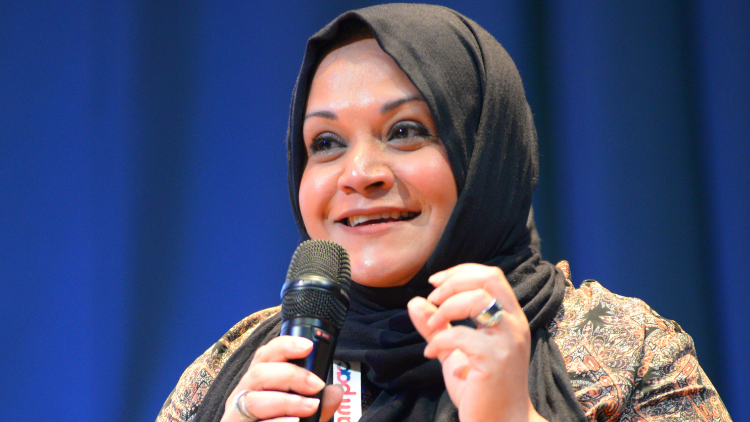
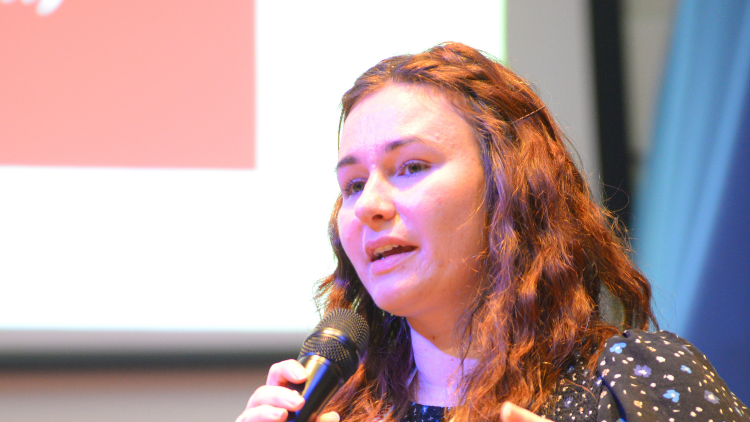
I had the pleasure of talking to Georgina about her provision, practice and passion and she shared a glimpse into her work on the panel discussion at our conference. Here is more of what I learned about Georgina.
The heart of her work: connection over speed
For Georgina, the magic of homebased childcare begins with connection. Not the fleeting, surface-level familiarity you might get in a large setting, but deep relational knowing built over years.
One of the children in her care has been with her since they were eight months old – now approaching five, preparing for school, and carrying four and a half years of shared experience with her. Georgina describes knowing them “inside out, upside down, and back to front.”
She knows, their fears, strengths, favourite things, the activities that make them come alive and the moments they need reassurance, and the moments they are ready to leap.
This level of attunement isn’t accidental––it’s the outcome of a model where children are seen, heard, and held consistently by one key adult. Georgina calls it one of the irreplaceable powers of homebased care: long-term consistency.
Transitions: the small moments that matter most
Georgina has recently delivered training on transitions, and her message is striking; we often think of transitions as the “big ones” — starting school, moving room, leaving a setting. But for children, transitions happen constantly.
- Moving from play to mealtime
- Going upstairs for a nappy change
- Finishing one activity and beginning another
- Being collected by a grandparent
- Watching a new child enter the space
Children feel every shift. In a culture that moves fast and pushes productivity, Georgina argues that children need the opposite: adults who slow down, notice, and help them regulate through changes. Homebased settings, with their gentle pace and small numbers, give her the freedom to respond to each transition with connection rather than rushing.
Championing the unique child
The Early Years Foundation Stage tells us each child is unique––a phrase repeated so often it risks becoming a buzzword. But Georgina brings it to life.
She talks about two children in the same environment:
- One might run, climb, and explore every inch outside
- Another might crouch quietly, picking stones from the dirt
- A third may watch others for twenty minutes before joining in
Same setting. Same resources. Completely different responses.
Her role, as she sees it, is to tune in to each child’s individual rhythm, not impose her own. She blends pedagogies––heuristic play, open-ended resources, outdoor exploration, communication-rich interactions––to create environments where each child can be fully themselves.
The weight carried by childminders
Georgina is honest about the pressures facing the sector; rising emotional demands, increasing administrative responsibility, lower numbers of childminders than ever, lone working, policy uncertainty and being “all the roles” at once––educator, cook, cleaner, administrator, manager, key person, and emotional anchor.
She fears the decline of childminding means losing a model that offers something no other setting can replicate––deep continuity + small groups + embedded family partnership.
“Losing homebased childcare,” she says, “would be a shame not just for children, but for communities — for the whole nation.”
Georgina is passionate about growth. She reads, researches, attends training, and experiments with new ideas. Her practice shifts constantly because children shift constantly. For her, learning is not an addon; it’s part of the joy.
“If I ever have a day where I’m not learning something,” she says, “something’s wrong.”
It’s this mindset that makes her provision dynamic, reflective, and child-centred.
A voice for the sector
Georgina is already inspiring many through her online presence, and she continues to expand her influence, delivering webinars, speaking at events, and sharing her reflective practice with honesty and heart.
Her story is a reminder that childhood doesn’t need rushing, connection outperforms curriculum, the smallest transitions can carry the biggest emotions, families thrive when practitioners and parents are in partnership and homebased childcare plays a vital role in the early years landscape.
And that the magic of this work lies not in grand gestures, but in the everyday moments — a child’s confidence growing, a strong bond forming, a parent feeling supported, a practitioner learning something new.
Georgina is one of the many childminders holding onto childhood — carefully, gently, and with unwavering commitment.